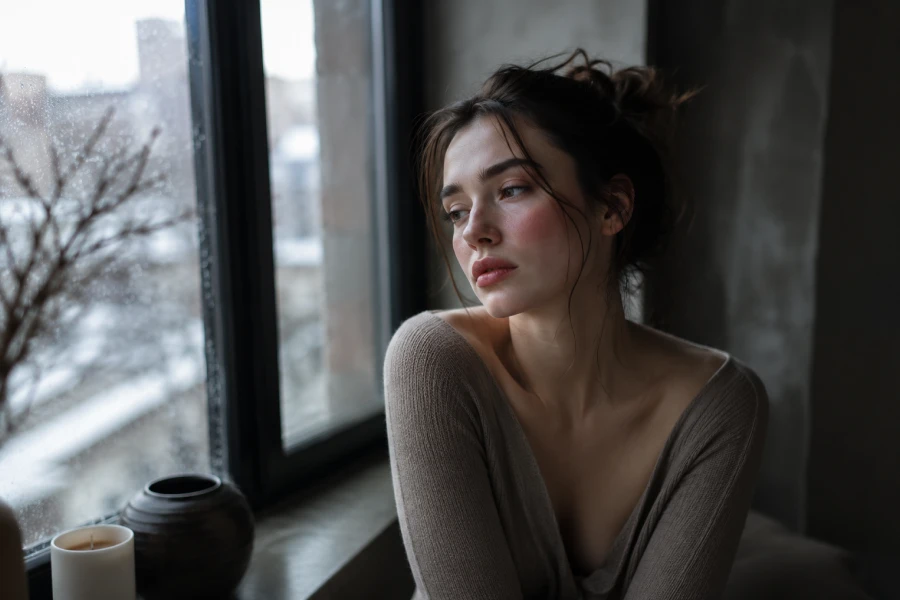
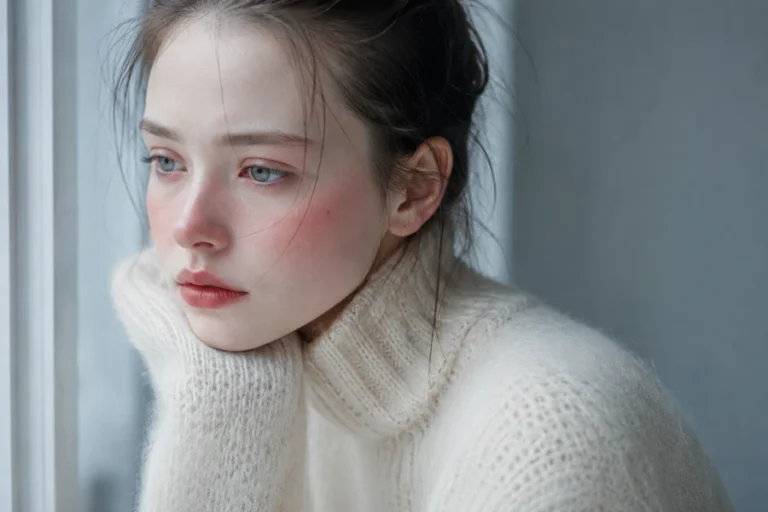
The sad blush look has become popular because it turns softness into a statement. It does not rely on sharp contour, heavy lashes, or obvious glamour. Instead, it creates emotion through delicate placement and muted color. On pale winter skin, the effect can feel especially striking. The cheeks appear flushed, thoughtful, and slightly windswept. The face gains depth without losing innocence. This style works because it feels human. It suggests mood rather than perfection, which makes it far more interesting than a standard polished face.
Modern beauty often values personality over symmetry. This trend fits that shift perfectly. It allows makeup to show softness, vulnerability, and atmosphere. A delicate complexion styling approach helps the face look expressive without becoming overly styled. The finish should not appear flawless in a plastic way. It should look lived in, tender, and intentional. That emotional quality gives the trend its charm.
The skin finish should sit between matte and dewy. Too much shine can distract from the blush. Too much powder can make the face look dry. A satin finish usually works best. It reflects light softly while keeping texture controlled. Apply skincare in thin layers. Let each step settle before makeup. This creates a calm base. Once the base feels comfortable, blush can blend smoothly and hold its shape.
Traditional blush often lifts the face upward. This style does something different. It places color closer to the center and slightly lower on the cheek. That position creates softness under the eyes and around the nose. The effect feels emotional rather than sculpted. Blend outward with patience. Keep the strongest pigment near the natural flush zone. This placement creates the signature mood without making the face look heavy.
Shade choice controls the entire story. Soft mauve, dusty pink, faded rose, and sheer berry usually work well. Bright candy pink can feel too playful. Warm peach can disturb the winter mood. The ideal shade looks like a natural flush after cold air. It should not overpower the lips or eyes. A winter skin makeup tips approach keeps tones muted and balanced. That makes the result easier to wear.
Eye makeup should support the cheeks without stealing attention. Soft brown mascara, a taupe shadow wash, or bare lids can all work. Avoid heavy winged liner if the goal is tenderness. The eyes should look awake but not overly defined. A little brightness in the inner corner can help. Keep brows brushed and natural. This restraint lets the cheek color carry the emotion. The entire face then feels more cohesive.
Lips should feel blurred, balmy, or softly stained. A sharp lip line can make the look feel too formal. Choose muted rose, berry balm, or sheer mauve. Press color into the lips instead of painting a perfect edge. This creates harmony with the cheeks. If the blush is cool, keep the lip cool too. When tones agree, the face looks intentional. Balance matters more than product count.
The trend can become unflattering when too much pigment collects under the eyes. Pale skin shows excess quickly. Step back from the mirror after each layer. Natural light will reveal whether the color has become too strong. If it looks heavy, soften it with a clean sponge. You can also add a thin veil of base around the edges. This restores softness without removing the entire effect.
Hair and clothing can strengthen the mood. Loose hair, soft waves, sleek buns, and cozy textures all pair well. Cool neutrals, gray knits, ivory scarves, and deep berry sweaters support the palette. The makeup should feel connected to the full look. A flushed cheeks technique becomes more expressive when styling feels aligned. Small details create atmosphere. That is what makes the look memorable.
The final effect should feel like a winter portrait. Skin looks calm. Cheeks carry emotion. Lips stay soft. Eyes remain gentle. Nothing appears too perfect or too undone. This balance makes the trend practical beyond social media. It can work for everyday errands, casual dinners, and quiet evenings out. When applied with restraint, it becomes less of a trend and more of a signature mood.

Leave a comment