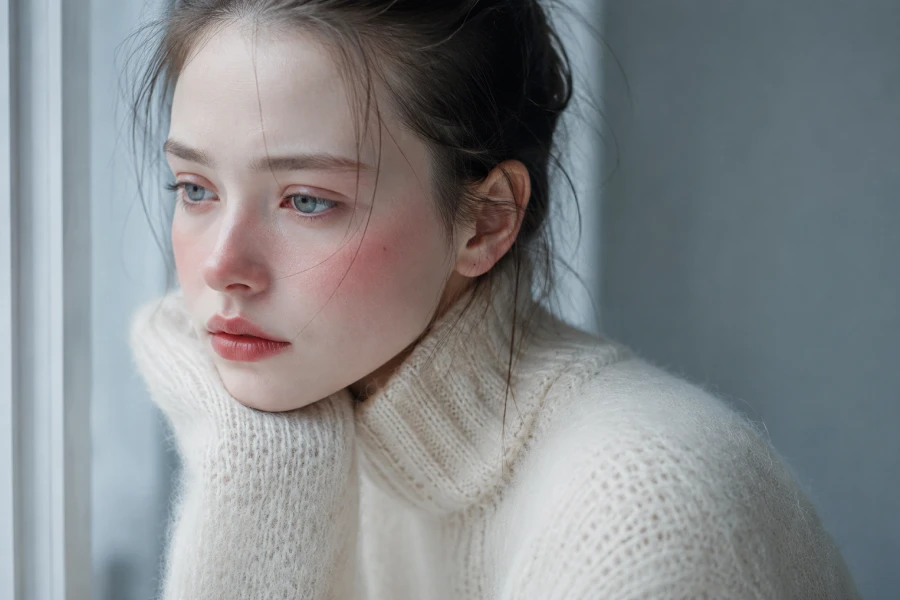
Beauty trends often look different once they meet real winter light. The sad blush for pale skin trend works because it respects softness, transparency, and delicate contrast. It does not demand heavy sculpting or loud color. Instead, it creates a tender flush that looks emotional, cool, and quietly romantic. Pale winter complexions usually need restraint more than intensity. Too much warmth can turn orange. Too much pigment can sit on top of the face. This look succeeds when color feels diffused, almost like it arrived naturally. That is why it feels modern, wearable, and surprisingly flattering.
Winter light can make makeup appear sharper than expected. It reflects blue tones, softens warmth, and reveals texture quickly. This is where pale winter makeup benefits from a gentle approach. Cool rose, muted berry, and faded mauve shades create believable emotion on fair skin. They add life without fighting the season. The result feels expressive rather than dramatic. Your cheeks look touched by cold air, not painted for attention.
Texture shapes the final mood more than many people realize. Cream blush creates a soft, skinlike finish. Powder blush gives more control, especially on oily areas. Liquid tints can look beautiful, but they require careful blending. Pale winter skin often shows edges quickly. Because of that, sheer formulas usually work better than dense pigments. The goal is not maximum color. It is a blurred finish that makes the face look alive, gentle, and slightly wistful.
Placement makes this look feel intentional. Instead of lifting blush high toward the temples, apply it slightly lower and closer to the center of the face. A soft sweep under the outer eye can create that quiet, sentimental effect. The color should not form a harsh circle. It should melt outward with no obvious border. A soft blush placement keeps the mood refined. Blend slowly, then pause before adding more.
Dryness can interrupt even the most beautiful blush work. Winter skin often needs more preparation before color touches the face. Lightweight moisturizer, a flexible base, and minimal powder help blush settle naturally. When skin looks tight, blush can appear patchy. When skin looks comfortable, color becomes softer. Hydration also keeps pale skin from looking flat. This matters because the trend depends on contrast. A calm base allows the cheeks to carry the emotion.
Cool undertones usually respond well to blue-based pinks, dusty roses, and soft cranberry shades. These colors echo natural flushing without adding unwanted yellow or peach. A cool-toned blush routine can make the effect easier to repeat. Start with one sheer layer. Let it settle. Then add a second veil only where the face needs more feeling. This method keeps the result polished, not theatrical.
Blending should soften the blush, not erase its character. Use small circular motions with a sponge, brush, or fingertips. Keep the strongest color near the natural flush zone. Feather the edges into foundation or skin tint. Avoid dragging pigment too far downward. That can make the face look tired. The mood should feel tender, not heavy. Good blending makes the color look like part of your expression, rather than a separate makeup step.
Restraint separates editorial softness from costume makeup. The trend can lose charm when paired with too much highlighter, heavy contour, or sharp eyeliner. Let the cheeks lead the look. Keep lips blurred, brows natural, and skin softly finished. A flushed cheeks technique works best when everything around it feels quiet. This balance gives the face a poetic quality. It also makes the style easier to wear in daylight.
Wearability comes from adapting the trend to your face, not copying a single image. Some people need blush closer to the nose. Others need it higher to avoid shadows. Pale skin can vary from porcelain to fair olive, so testing matters. Apply makeup near natural light whenever possible. Notice how the shade changes after ten minutes. Once the color settles, you can decide whether to add, soften, or stop.
The final finish should feel soft, emotional, and clean. Mist the face lightly if the makeup looks too powdery. Press the skin with clean palms to settle products. Keep the eye area simple so the cheeks remain expressive. A little balm on the lips completes the mood without stealing attention. This look proves that winter beauty does not need heavy drama. Sometimes the most memorable face is the one that looks gently moved.

Leave a comment